 S35
S35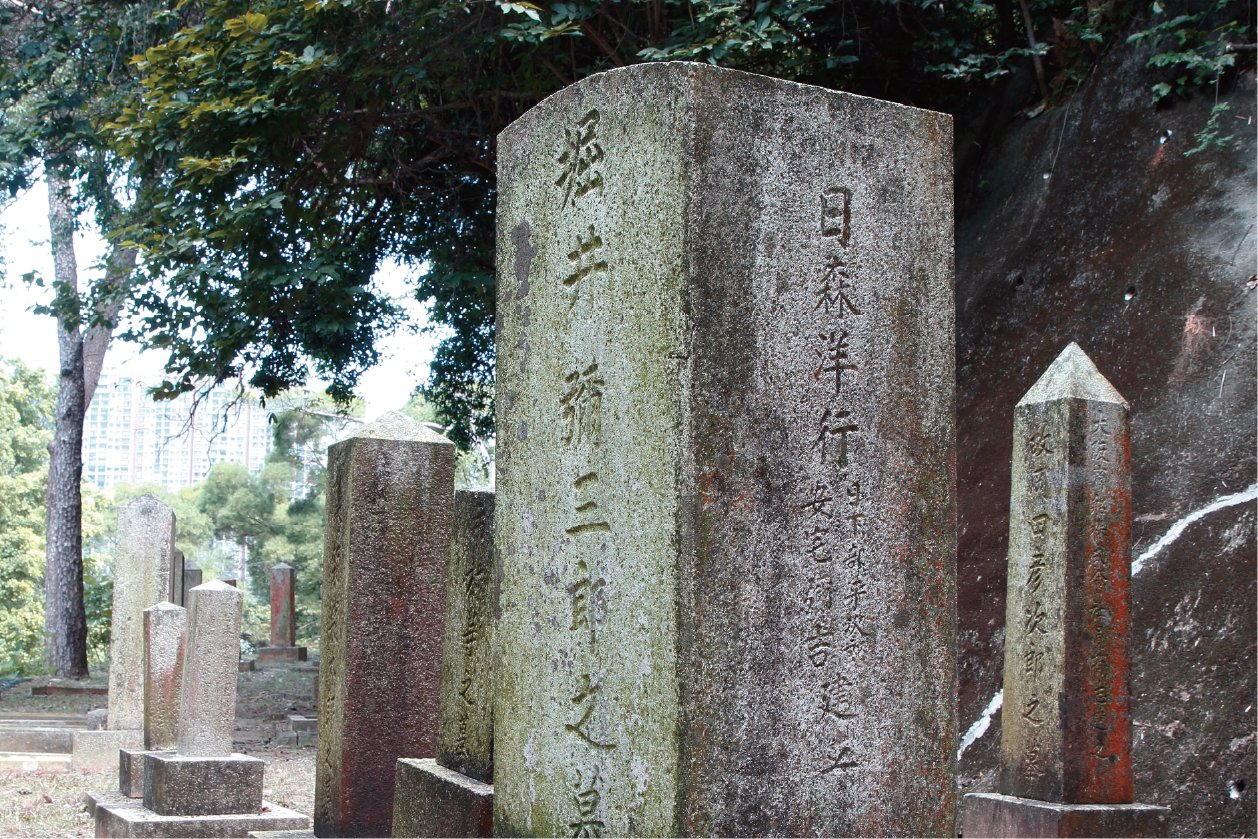
HORII Yasaburō, a native of Shiga prefecture, was working for the Japanese trading company Kusakabe & Co. (Yat Sum) in Hong Kong at the time of his death from typhoid fever at the Peak Hospital on June 20, 1904, aged 25. His tombstone bears the names of the company’s founder, KUSAKABE Heijirō, and its Hong Kong General Manager, ATAKA Yakichi. Both Kusakabe and Ataka had worked in Osaka before moving to Hong Kong to make their fortunes. Horii may have been looking to emulate their financial success had his life not been cut short.
Kusakabe Heijirō (1852-1899) was from Tanba (now part of Kyoto prefecture) and started his working life as a shop boy for a pharmaceutical wholesaler in Doshōmachi, Osaka, in the late 1860s. Keen to take advantage of the burgeoning trade ties between Osaka and Hong Kong, Kusakabe established his own trading company in the territory in the late 1870s. In its early years, the company, which would eventually be registered under the name of Kusakabe & Co. (Yat Sum), sold Japanese chinaware in Hong Kong and exported auction items to Japan. Kusakabe would later establish a branch office in Shanghai, while serving as the Hong Kong General Manager of another trading company, Kōgyō Shōkai, which specialised in the export of Hokkaido specialities, such as dried abalone, dried cod and agar, as well as matches and umbrellas.
Ataka Yakichi (1873-1949) was from Kanazawa, Ishikawa prefecture, and graduated from the Tokyo Higher Commercial School (today’s Hitotsubashi University) in 1895. He joined Kusakabe’s company in Osaka later that year, before moving to Hong Kong to become the branch’s General Manager. Ataka was key to developing Kusakabe & Co.’s lucrative sugar trade. He partnered with one of the most prominent Indonesian Chinese trading companies, Kian Gwan, and established his own network for purchasing raw sugar from Java.
In 1904, the year that Horii passed away, Kusakabe folded his Hong Kong business, which was ultimately acquired by Ataka’s newly established company, Ataka Shōkai (later Ataka & Co). However, partly as a result of both the Tatsu Maru affair in 1908 (see the entry for TERUMINE Hirokichi) and the Nittō Case in 1909 (a corruption case involving members of the Japanese House of Representatives), Ataka decided to sell Yat Sum to Suzuki Shōten (one of the forerunners of today’s Sojitz Corporation). Headquartered in Osaka, Ataka & Co. would grow to become one of post-war Japan’s ten most prominent trading houses. Losses incurred during the 1973 oil crisis would lead to its eventual acquisition by Itochu Corporation in 1977.
Ataka is possibly best known outside of Japan for his patronage of SUZUKI Teitarō Daisetsu (aka D.T. Suzuki, 1870–1966). Ataka and Suzuki met while studying in Tokyo, where they lived in the same dormitory. A native of Kanazawa, Ishikawa prefecture like Ataka, Suzuki was a scholar and author who introduced several generations of English speakers to Zen Buddhism. He spent eleven years in the United States, from 1897 to 1909, during which time he became fluent in English.
Upon his return to Japan, and with the support of his American wife, Beatrice Erskine Lane, Suzuki launched Eastern Buddhist, Japan’s first English-language journal on Buddhism and Buddhist studies. Towards the end of his life, he spent several years teaching at Columbia University, where his students included the composer John Cage and the author J.D. Salinger. Ataka supported Suzuki’s endeavours throughout his life and financed many of his publications.
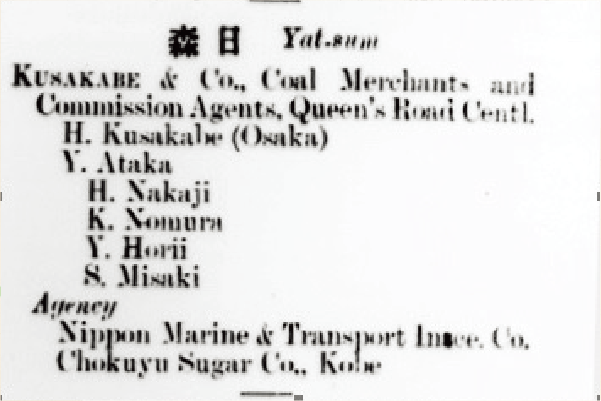
Kusakabe & Co’s entry in the 1904 Directory & Chronicle, published by the Hong Kong Daily Press.
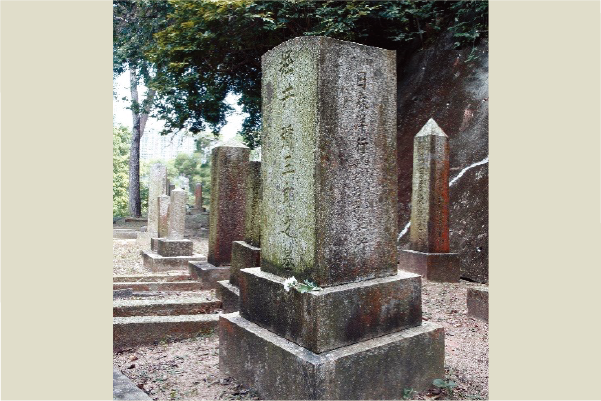
Horii’s tombstone bears the names of the company’s founder, Kusakabe Heijirō, and its Hong Kong General Manager, Ataka Yakichi.
Inotani, Satoshi. 2020. “The Translation of Zen: A Tribute to D. T. Suzuki.” Nippon.com, November 11, 2020. https://www.nippon.com/en/japan-topics/b07214/
Maeda, Kazutoshi. 1990. “General Trading Companies in Pre-War Japan: A Sketch.” In General Trading Companies: A Comparative and Historical Study, edited by Shin’ichi Yonekawa, 92-110. Tokyo: United Nations University Press.
The Directory & Chronicle. 1903. Published by the Hong Kong Daily Press. The Directory & Chronicle. 1904. Published by the Hong Kong Daily Press. The Museum of Oriental Ceramics, Osaka: https://www.moco.or.jp/en/
Births and Deaths General Register Office, Immigration Department, Government of the Hong Kong Special Administrative Region