 S28
S28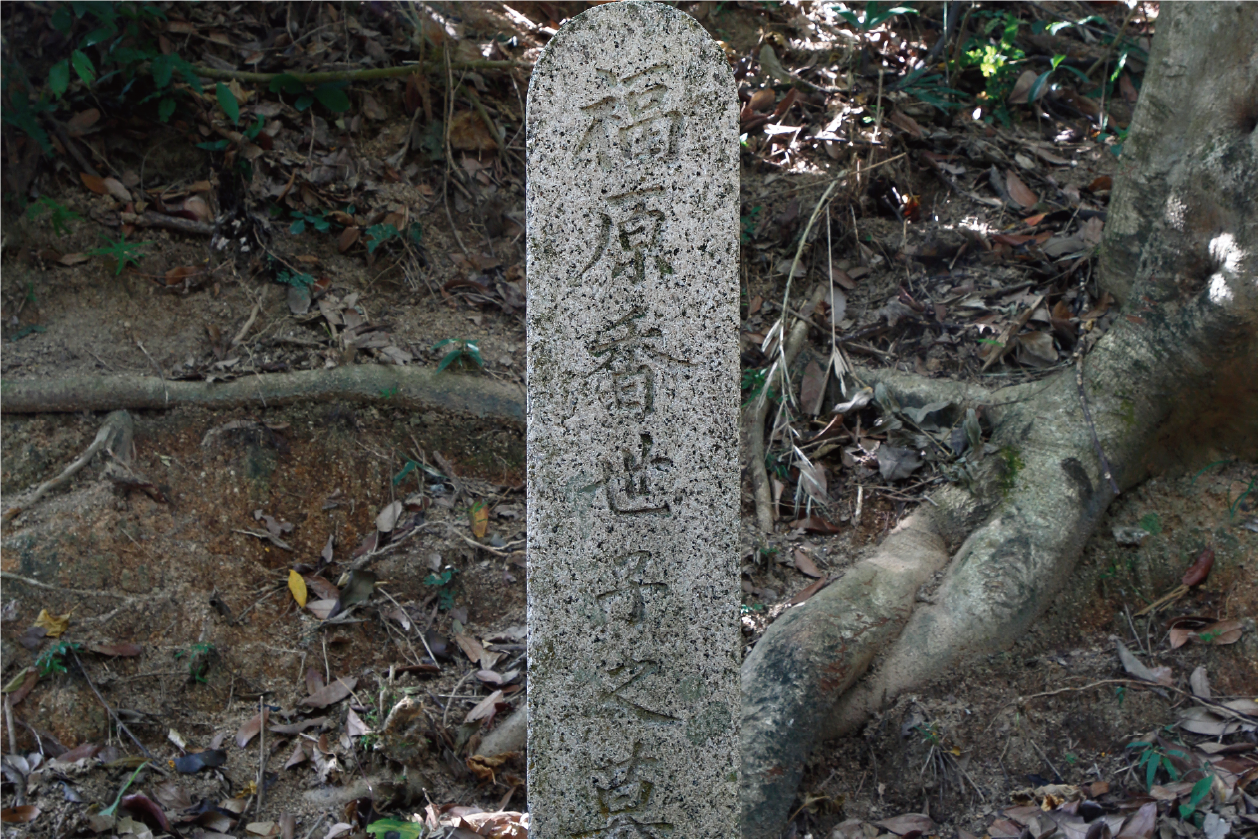
The Mitsui Bussan Kaisha (Trading Co.)* was officially established in Tokyo, Japan, in July 1876. Taking advantage of the Meiji government’s new policy of openness and industrialisation, the company quickly expanded overseas, first to Shanghai and Paris, followed soon after by Hong Kong, New York and London. The Mitsui Bussan Kaisha (Sam Ching) Hong Kong office opened in August 1878 and operated until 1882, departing the territory briefly before returning in 1886 to trade in coal from the government-operated Miike mine in Kyushu.
Japan’s Finance Minister, ŌKUMA Shigenobu, had been keen for Japan’s first national bank, Daiichi Kokuritsu Ginkō, to have a presence in Hong Kong through the agency of Mitsui Bussan, as part of the country’s efforts to modernise its fiscal system. These efforts included setting up the Japanese Imperial Mint in Osaka in 1871, with the yen as the country’s first standard currency, and
lobbying to have the silver yen recognised as legal tender in Hong Kong.
The coinage circulating in Hong Kong during the mid- to late-nineteenth century included the Carolus or Spanish dollar, the Mexican dollar, Indian rupees, English sovereigns, and Chinese coins, with the Mexican dollar widely used for trade. The Hong Kong Mint was established in 1866 in an attempt to limit the number of currencies and proliferation of counterfeit coins in the territory, but was ultimately deemed a failure and ceased all operations just two years later. Japan saw the demise of the Hong Kong Mint as an opportunity, and purchased its machinery, as well as the expertise of its engineers and architects, to set up its own facility in Osaka.
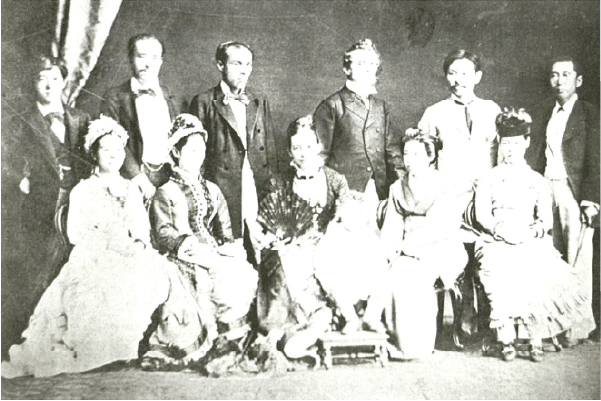
The Hong Kong Governor Sir John Pope Hennessy visited the Osaka mint during his three-month trip to Japan in 1879. Though the visit seems to have been made at his own initiative, Pope Hennessy was welcomed by a Japanese government eager to renegotiate the unequal treaties that were a legacy of the Tokugawa period and advocate for the acceptance of the Japanese yen as legal tender in Hong Kong. Despite Pope Hennessy’s support and intense lobbying by Chinese trading houses, the Lords of the Treasury in London decided against recognition of the yen in June 1881.
FUKUHARA Kayo’s father, FUKUHARA Eitarō, landed in Hong Kong in February 1886 to head Mitsui Bussan’s office in the territory, which, at the time, was a subdivision of the company’s Shanghai operation. A graduate of Keio Gijuku (College, later Keio University), Fukuhara joined Mitsui Bussan in 1880 and was part of a new group of young executives with English-language and accounting skills that the company sent on overseas postings to further develop their talents. A quick learner, the Hong Kong sub-branch prospered under his leadership and sold coal and coke, a coal by-product, to customers such as the French steamship line, Messageries Maritimes, and the Hong Kong enterprise, Green Island Cement Company. He also extended the range of import items to Japanese-spun cotton yarn and rice, and expanded the firm’s trade in matches.
In recognition of his success, Fukuhara was promoted to General Manager of the now standalone Hong Kong branch on April 30, 1892. He and his wife Ei had welcomed a baby daughter, Kayo, at their home in Lower Mosque Terrace on January 5, 1892. Though Kayo was a common name at the time, the combination of characters used—“香世”—was not. “香” is the first character in the
Chinese name for Hong Kong “香港,” and “世” means “world.” While we can only speculate on the reasons for giving their daughter a name so connected with their situation, their choice is all the more poignant in that Kayo only lived for five months, sadly passing away on May 28, 1892. The
Fukuhara family would leave Hong Kong, and Kayo’s grave in the Happy Valley Cemetery, the
following year. After postings in London, Osaka and Tokyo, Fukuhara was seconded to an affiliate of Mitsui Bussan, Onoda Cement, where he served as president from 1906 to 1916.
It would have been rather unusual for a Japanese executive to have his family with him in Hong Kong in the latter part of the nineteenth century. Records show that there may have been just 13 Japanese in Hong Kong in 1875, with that number increasing to 86 in 1880, and 243 in 1889. The colony’s sanitary conditions were poor and disease was rife. Malaria, cholera and smallpox were all endemic, though a vaccine for smallpox was introduced in 1888. Hong Kong had its first major outbreak of plague in 1894 and it is estimated that over 2,500 people died. It is during this epidemic that both the Japanese bacteriologist, KITASATO Shibasaburō, and French-Swiss bacteriologist Alexandre YERSIN visited the territory and discovered the plague bacillus. The city’s hygiene gradually improved at the beginning of the twentieth century, and it became more common for Japanese expatriates to be accompanied by their families and raise their children in Hong Kong.
* Legally speaking, there has been no continuation between the former Mitsui & Co. and the current Mitsui & Co.
The Hong Kong Governor, Sir John Pope Hennessy, during his visit to Japan in 1879 (back row, third from right). Japan’s Finance Minister, Ōkuma Shigenobu, is to Pope Hennessy’s right, and Andō Tarō, Japan’s Consul in Hong Kong, is second from left. Photo originally published in Okuma-haku 100wa [One Hundred Tales] in 1909.
Kayo was just five months old when she passed away from convulsions.
Emori, Taikichi, ed. 1909. Okuma-haku 100wa [Count Okuma’s One Hundred Tales], accessed via the National Diet Library Digital Collections.
Endacott, George B., and Arthur Hinton. 1968. Fragrant Harbour: A Short History of Hong Kong. Hong Kong: Oxford University Press.
MacKeown, P. Kevin. 2020. A Stormy Petrel: The Life and Times of John Pope Hennessy. Hong Kong: City University of Hong Kong Press.
Mizuta, Susumu. 2019. “Making a Mint: British Mercantile Influence and the Building of the Japanese Imperial Mint.” Architectural History 62: 89-111.
Ng, Benjamin Wai-ming. 2005. “Making of a Japanese Community in Prewar Period (1841–1941).” In Foreign Communities in Hong Kong, 1840s-1950s, edited by Cindy Yik-yi Chu. Palgrave Macmillan.
Pennell, Wilfred V. 1961. History of the Hong Kong General Chamber of Commerce 1861-1961. Hong Kong: Cathay Press.
Sakamoto, Masako. 1990. “Diversification: The Case of Mitsui Bussan.” In General Trading Companies: A Comparative and Historical Study, edited by Shin’ichi Yonekawa, 46-91. Tokyo: United Nations University Press.
Shibagaki, Kazuo. 1966. “The Early History of the Zaibatsu.” The Developing Economies 4, No. 4 (December): 535-566.
Starling, Arthur, Faith C.S. Ho, Lilian Luke, Tso Shiu-chiu, and Edwin C.L. Yu, eds. 2006. Plague, SARS and the Story of Medicine in Hong Kong. Hong Kong: Hong Kong University Press.
Yonekura, Seiichiro. 1985. “The Emergence of the Prototype of Enterprise Group Capitalism: The Case of Mitsui.” Hitotsubashi Journal of Commerce and Management 20: 63-104.
Yonekura, Seiichiro, and Hiroshi Shimizu. 2012. “Entrepreneurship in Pre–World War II Japan: The Role and Logic of the Zaibatsu.” In The Invention of Enterprise: Entrepreneurship from Ancient Mesopotamia to Modern Times, edited by David S. Landes, Joel Mokyr, and William J. Baumol, 501-526. Princeton: Princeton University Press.
Births and Deaths General Register Office, Immigration Department, Government of the Hong Kong Special Administrative Region.