 S34B
S34B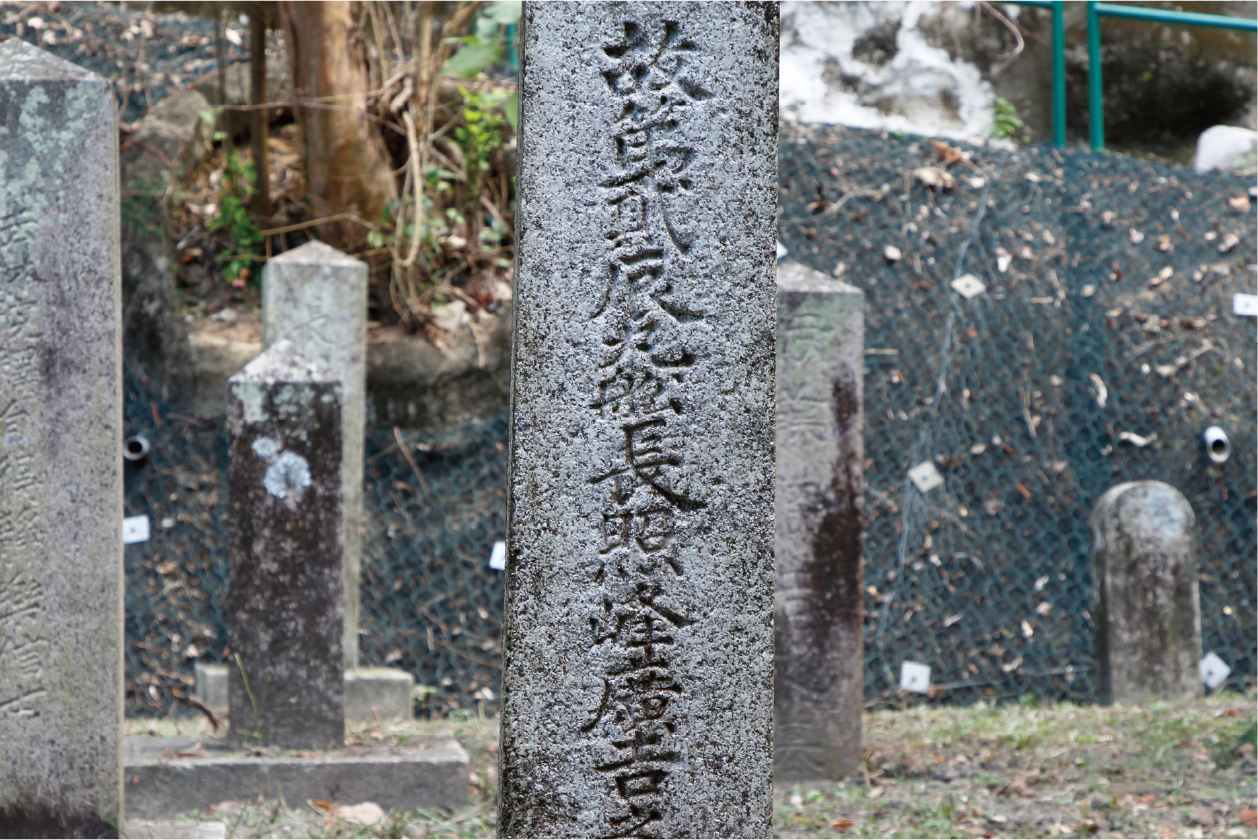
On February 5, 1908, the Japanese ship Daini Tatsu Maru (hereafter Tatsu Maru) was boarded by Qing officials in the waters off the then Portuguese colony of Macau under suspicion of purveying arms to anti-Qing revolutionaries in Southern China. The ship, which belonged to a member of the Japan Shipowners’ Association and was captained by TERUMINE Hirokichi, had departed Kobe on January 26. Upon boarding the ship, the officials discovered at least 1,500 rifles and 40,000 rounds of ammunition (accounts vary on the actual numbers). They proceeded to replace the Japanese flag with the Qing ensign and towed the ship to Whampoa, near Canton (present-day Guangzhou) where the vessel and its cargo were placed in custody.
The Japanese government responded with outrage, stating that the arms had been shipped with all proper legal documentation by Mr. Awaya in Osaka to a Macanese firm through the intermediary of the Ataka Company. Furthermore, they claimed that the ship was not in Chinese territorial waters
when it was boarded and that the removal of its Japanese flag was an insult. The incident led to intense and increasingly acrimonious negotiations between the two sides, with both relying on various documents and testimonies to justify their actions. The situation was discussed in newspapers around the world, and various suggestions were put forward, including appointing British or American intermediaries or referring the case to The Hague Arbitration Court.
Ultimately, the Japanese government, threatening military action, put forward a five-point solution on March 13, 1908, which was accepted by the Chinese government two days later. The five conditions for a peaceful settlement, as reported in the March 14 issue of the London Times, included an apology; the unconditional release of the vessel; payment of the cost of the arms under detention; China to investigate and take suitable measures against those responsible; and an indemnity for actual losses. As a conciliatory gesture, Japan undertook to cooperate in the task of preventing the smuggling of arms into China. However, many people in Southern China were unhappy with the Qing government’s backing down and acceptance of Japan’s terms for the resolution of the Tatsu Maru incident. Their dissatisfaction led to a boycott of Japanese goods that would last at least eight months.
Unfortunately, the agreement over the fate of the Tatsu Maru came too late for 33-year-old Terumine Hirokichi. A native of Akō in Hyōgo prefecture, Terumine was on his tenth voyage as the well-respected captain of the Tatsu Maru and was planning to get married on his return to Kobe.
The climate of Southern China did not suit him and he became sick, eventually passing away from acute pneumonia on March 28, 1908.
The Tatsu Maru incident took place in the context of extremely tense relations between Japan and China, and just thirteen years after the signing of the Treaty of Shimonoseki, which had brought an end to the Sino-Japanese War of 1894-1895. Chinese anger at the Qing government’s inability to resist foreign encroachment prompted the formation of a large number of anti-Qing organisations, which evolved into revolutionary activity following the foundation of the underground resistance movement Tongmenghui (Chinese Revolutionary Alliance) by Sun Yat-sen and others in Tokyo in August 1905. A series of uprisings would eventually lead to the demise of the Qing regime in 1911. Sun served as the first provisional president of the Republic of China in 1911-1912, and became known as the “founder of modern China.”
Sun Yat-sen (1866-1925) and his supporters were indeed rumoured to have been potential recipients of the arms and ammunition aboard the Tatsu Maru, though there is no conclusive evidence of this. Sun completed much of his education in Hong Kong and, in 1892, became one of the first Chinese students to graduate from the Hong Kong College of Medicine. During his sixteen years in exile, Sun travelled around the world raising funds for and awareness of his cause. He had several friends and financial backers amongst the Japanese community in Hong Kong and they helped him flee to Japan following the failure of the Guangzhou (Canton) Uprising in 1895. Of particular note is UMEYA Shōkichi (1868-1934), an entrepreneur from Nagasaki, who arranged for Sun’s passage to Kobe. Umeya (also transcribed into English as Mumeya) had moved to Hong Kong from Singapore in 1894 and set up a photography studio. It was there that, on January 4, 1895, he was to receive a visit from Sun, following their introduction at a party by Sir James Cantlie, a co-founder of the Hong Kong College of Medicine where Sun had been his pupil. Umeya himself would return to Japan in 1905 and establish the film promotion and production company, M. Pathé, which would eventually merge with three others to form Nihon Katsudō Shashin Kabushiki-gaisha (Nikkatsu).
Sun and Umeya would remain lifelong friends.
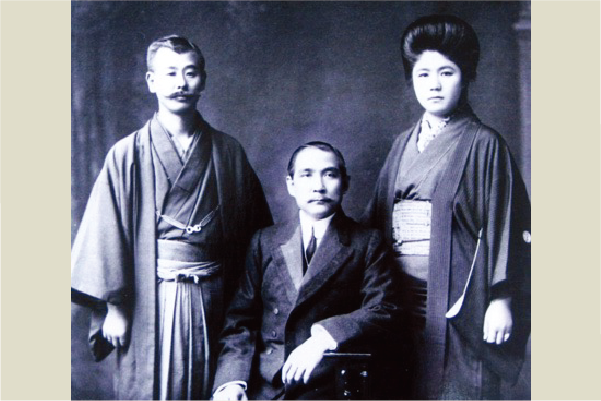
Umeya Shōkichi and his wife pose for a photograph with Sun Yat-sen (seated) in Tokyo in March 1914.
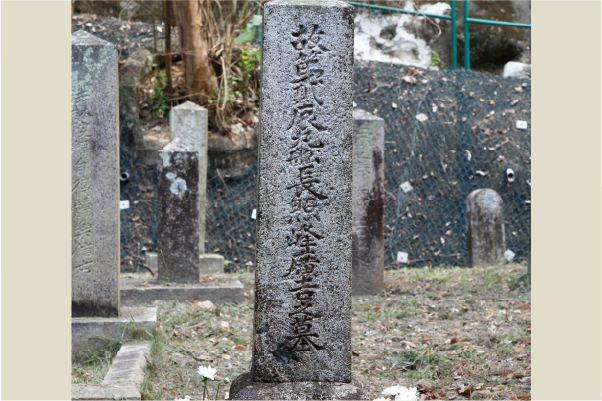
Terumine was the well-respected captain of the ill-fated Daini Tatsu Maru
Editorial Comment. 1908. “International Law Involved in the Seizure of the Tatsu Maru.” The American Journal of International Law 2, No. 2 (April): 391-397.
Hayton, Bill. 2019. “The Modern Origins of China’s South China Sea Claims: Maps, Misunderstandings, and the Maritime Geobody.” Modern China 45, No. 2: 127-170.
High, Peter B. 2005. “Shokichi Umeya: The Revolutionist as Impresario,” in Tagen Bunka to Mirai Shakai Kenkyu Project. Nagoya: Nagoya University.
Ministry of Foreign Affairs of Japan. “Japan-China Joint History Research Report (Provisional Translation) Modern and Contemporary History (March 2011).” https://www.mofa.go.jp/region/asia-paci/china/archives.html
Wong, Sin-kiong. 1993. “The Tatsu Maru Incident and The Anti-Japanese Boycott of 1908: A Study of Conflicting Interpretations.” Chinese Culture 34, No. 3 (September): 77-92.